Program of Activities (PoA) – Expert-Level Local Stakeholder Consultation, to be held on 05 MARCH 2026, for the proposed multi-country, multi-fuel Institutional Clean Cooking Programme.
Powering healthier kitchens, stronger institutions, and climate action across Africa
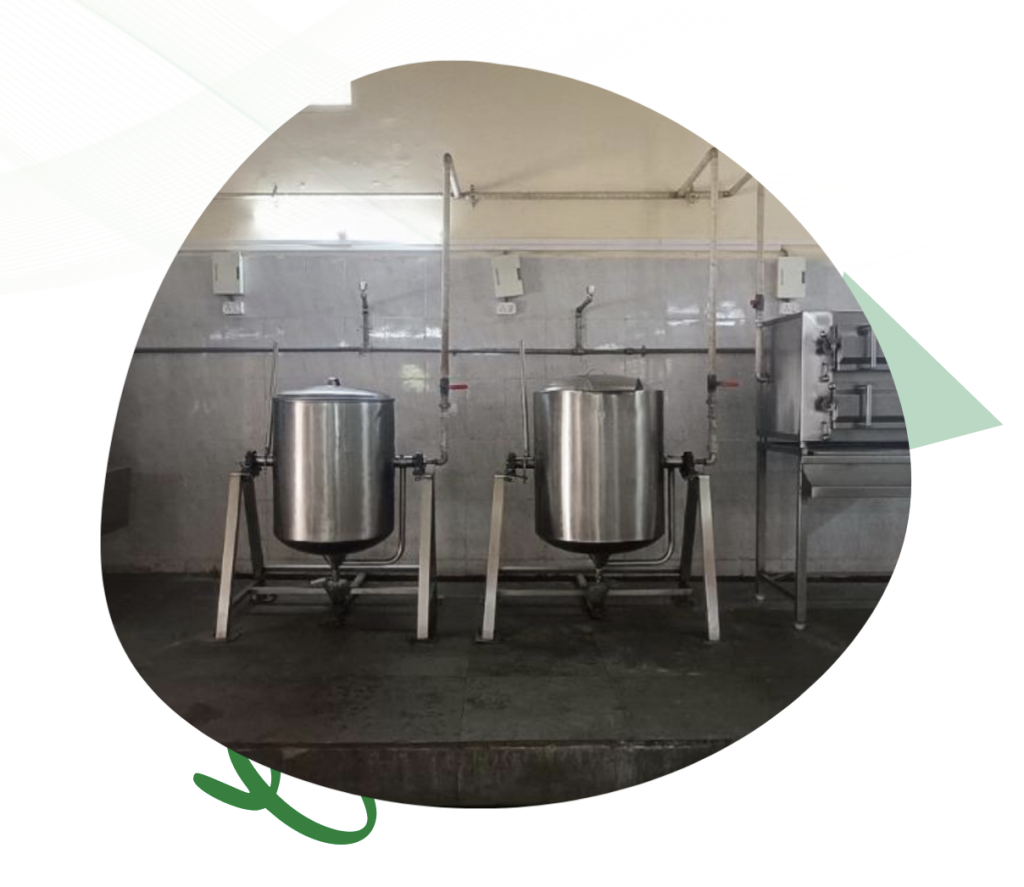
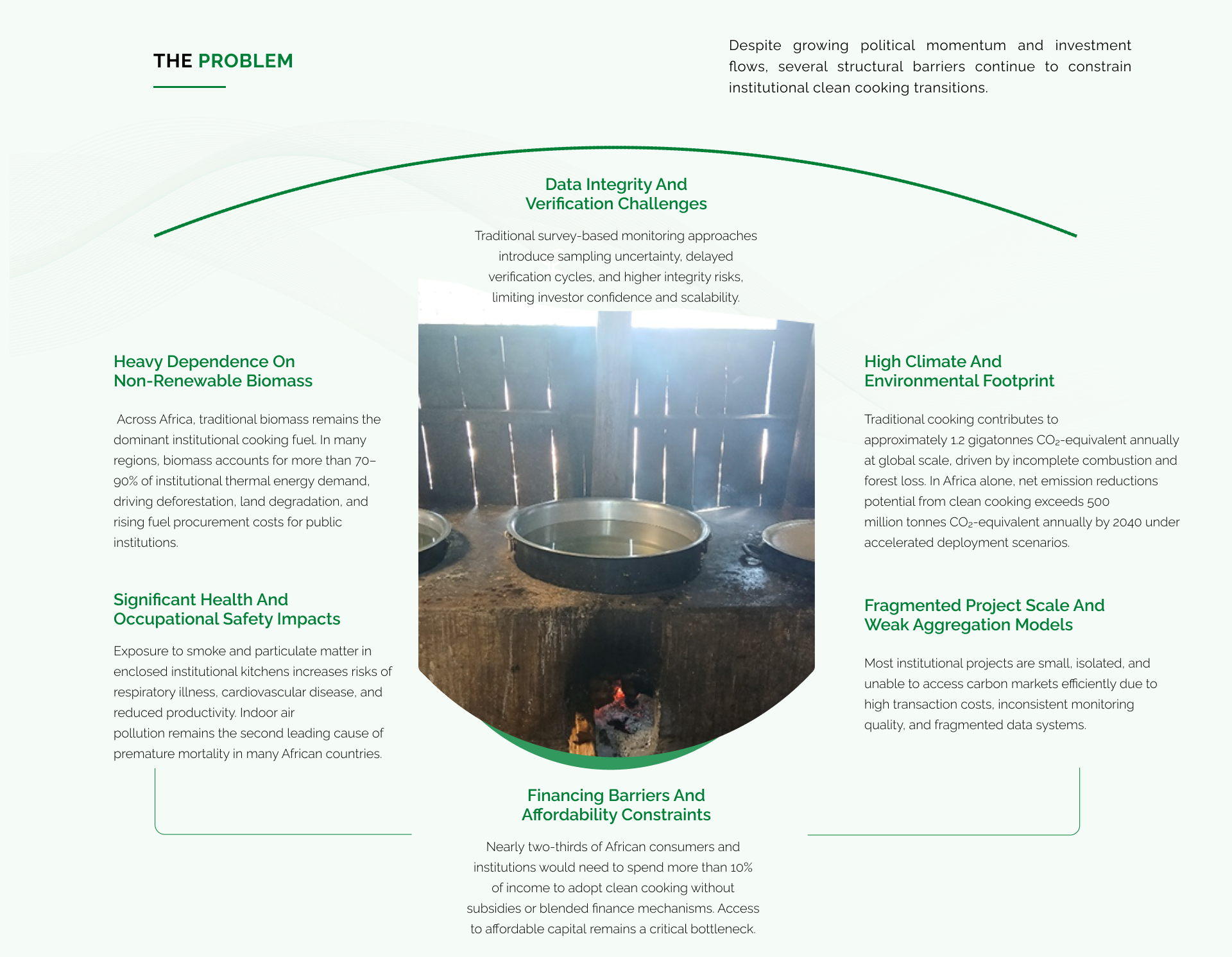
Across Africa, institutional facilities such as schools, hospitals, correctional facilities, military installations, refugee camps, universities, training centres, and large catering operations prepare millions of meals daily using inefficient and polluting cooking systems. The vast majority of these institutions continue to rely on firewood, charcoal, kerosene, and low-efficiency biomass technologies, creating a persistent burden on public budgets, natural ecosystems, public health systems, and national climate commitments. Today, nearly one billion people in sub-Saharan Africa lack access to clean cooking solutions, representing almost four in every five households, and institutional energy systems remain even further behind in modernisation. Traditional cooking practices contribute to approximately 815,000 premature deaths annually in Africa due to household and occupational air pollution, driven by exposure to fine particulate matter (PM₂.₅) and carbon monoxide. Across the continent, lack of clean cooking contributes to the loss of approximately 1.3 million hectares of forest each year and generates climate emissions equivalent to roughly one-quarter of Africa’s total energy-related CO₂ emissions.
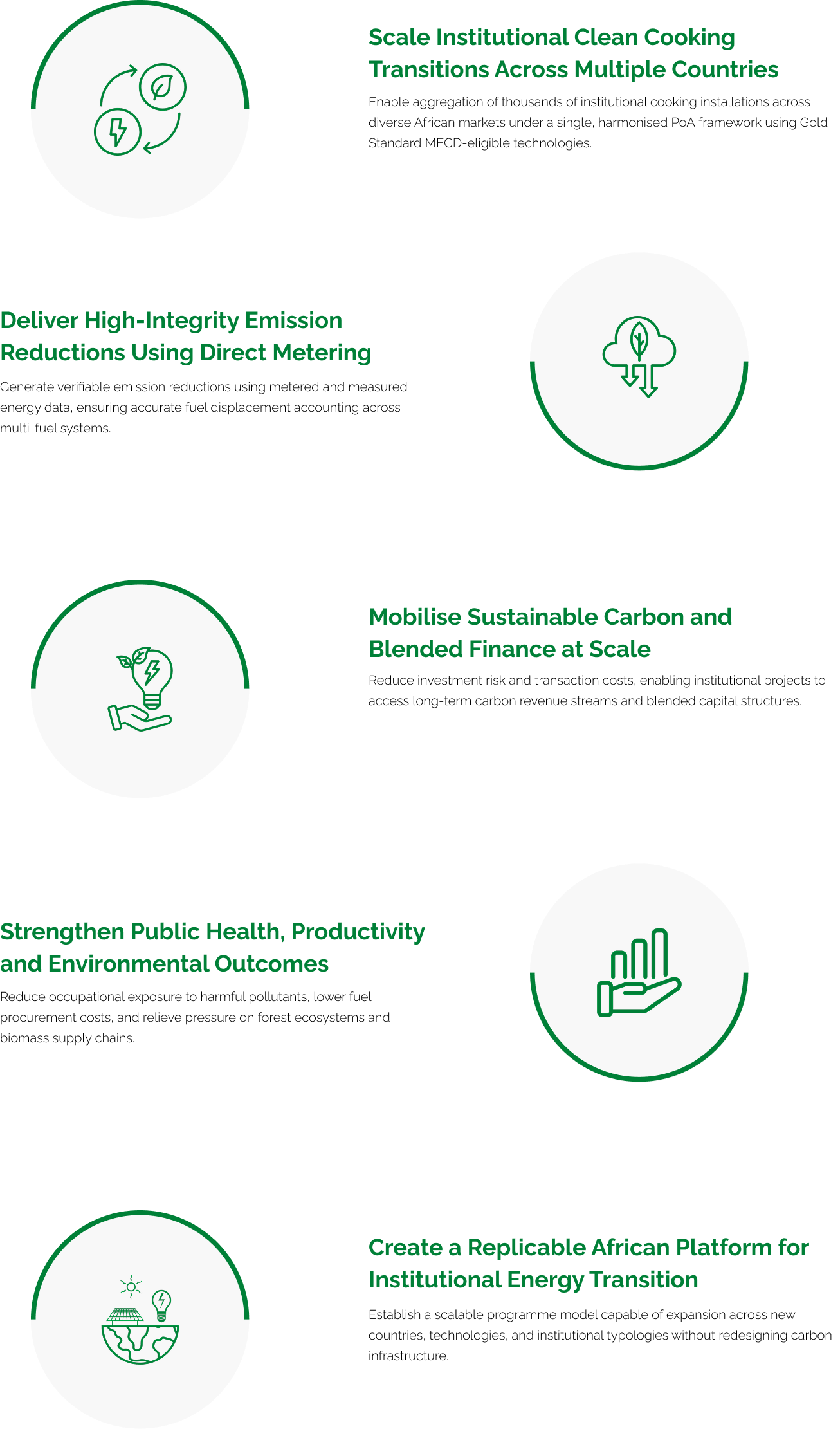
Investment momentum is accelerating, with approximately USD 675 million invested in Africa’s clean cooking sector in 2023 alone, yet this remains far below the estimated USD 2 billion per year required to place Africa on a pathway to universal clean cooking access by 2040. Carbon finance now represents roughly 10–12% of total sector financing flows, demonstrating its growing role in unlocking scalable deployment models. The Multi-Country Institutional Clean Cooking Programme of Activities (PoA) has been established to address this systemic gap by enabling large-scale aggregation of institutional clean cooking transitions across multiple African countries, leveraging high-integrity carbon finance supported by robust digital Monitoring, Reporting and Verification (dMRV) infrastructure. The PoA supports a diversified portfolio of clean cooking fuels and technologies, including electricity, LPG, bioethanol, biogas, advanced biomass systems, and emerging low-carbon solutions, allowing institutions and governments to deploy context-appropriate pathways while maintaining a unified carbon integrity framework.
The Multi-Country Institutional Clean Cooking PoA is designed to unlock system-scale decarbonisation and institutional energy transformation across Africa.
Programme of Activities (PoA) Structure
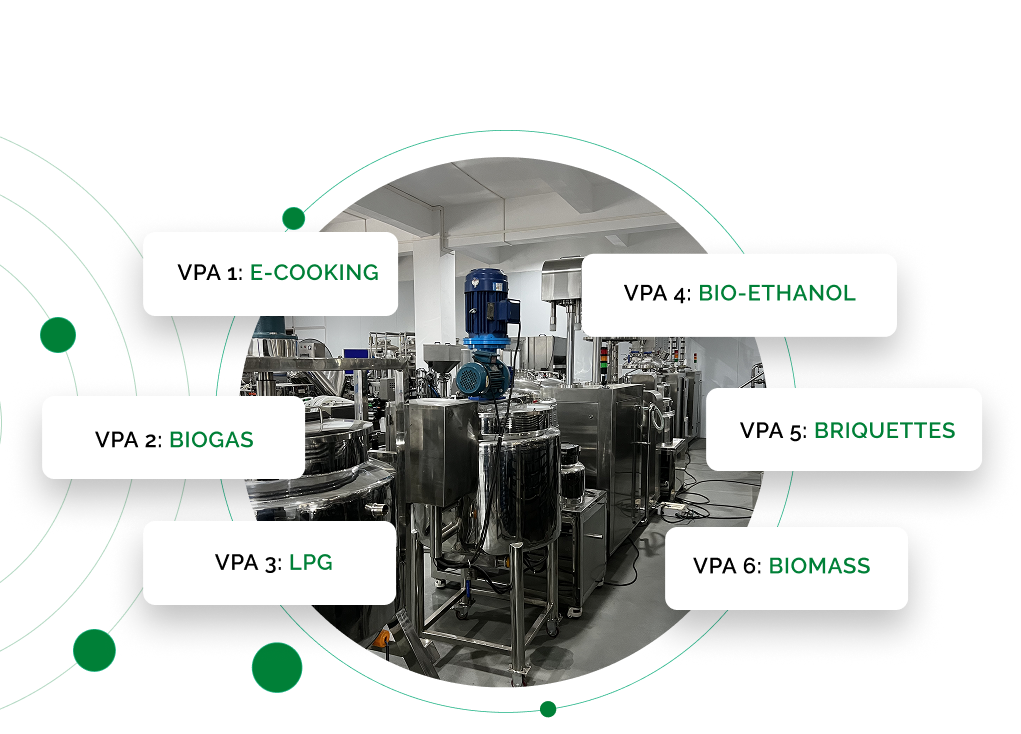
The programme is implemented as a Multi-Country Programme of Activities (PoA) under the Gold Standard Methodology for Metered and Measured Energy Cooking Devices (MECD). Individual projects are registered as Voluntary Project Activities (VPAs), reflecting the MECD framework.
Participating countries and institutions are onboarded through VPAs that apply the same methodological backbone while adapting baseline parameters, regulatory approvals, and deployment strategies to national contexts. This structure enables multi-country aggregation, rapid replication, and cost-efficient expansion, while maintaining environmental integrity and audit readiness.
The PoA supports multi-fuel deployment pathways, recognising that Africa’s clean cooking transition will be driven by a diversified mix of LPG (over 60% of projected access gains), electricity (~17%), bioethanol and biogas (~11%), and advanced biomass (~10%), depending on infrastructure availability and affordability dynamics.
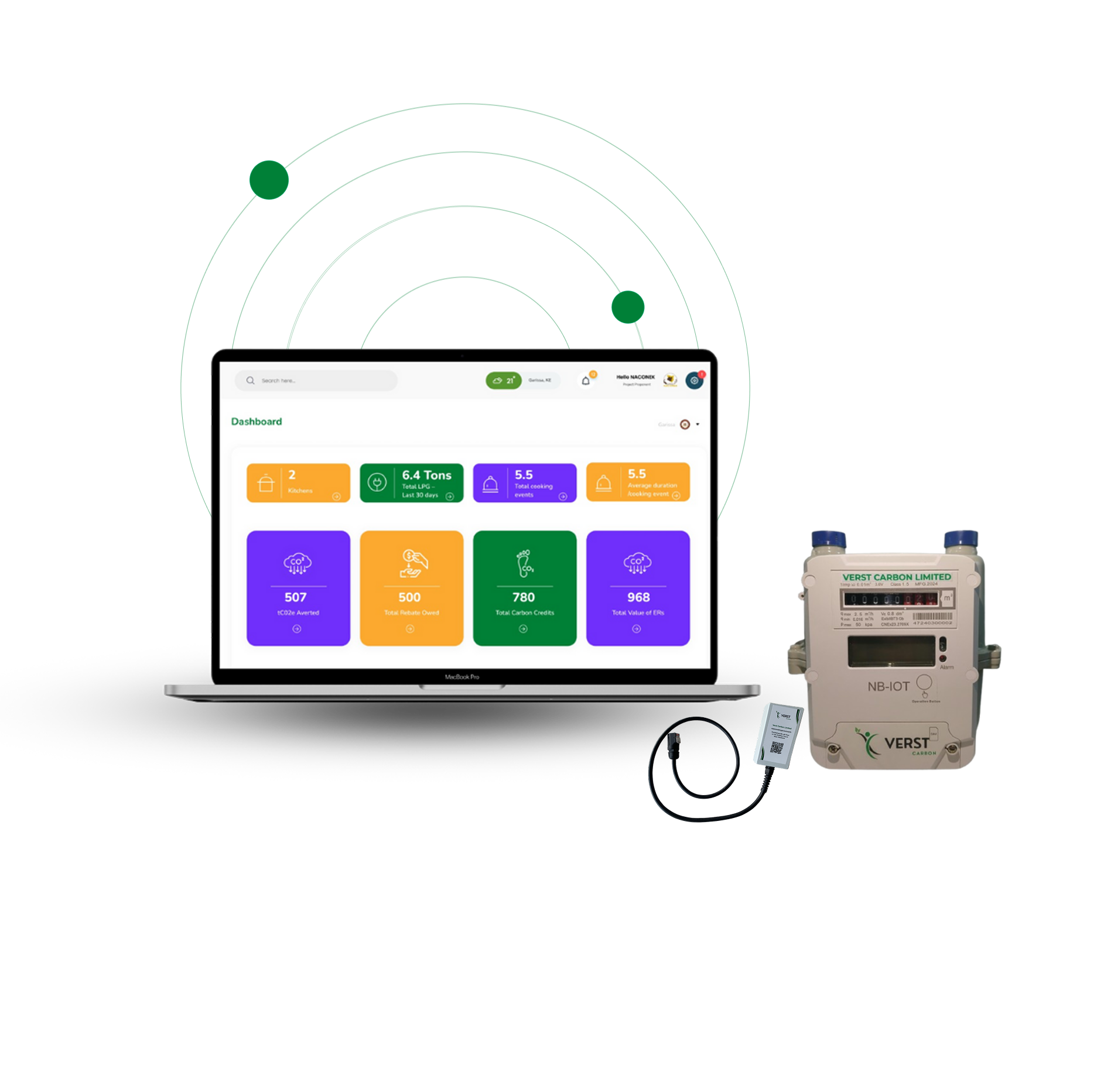
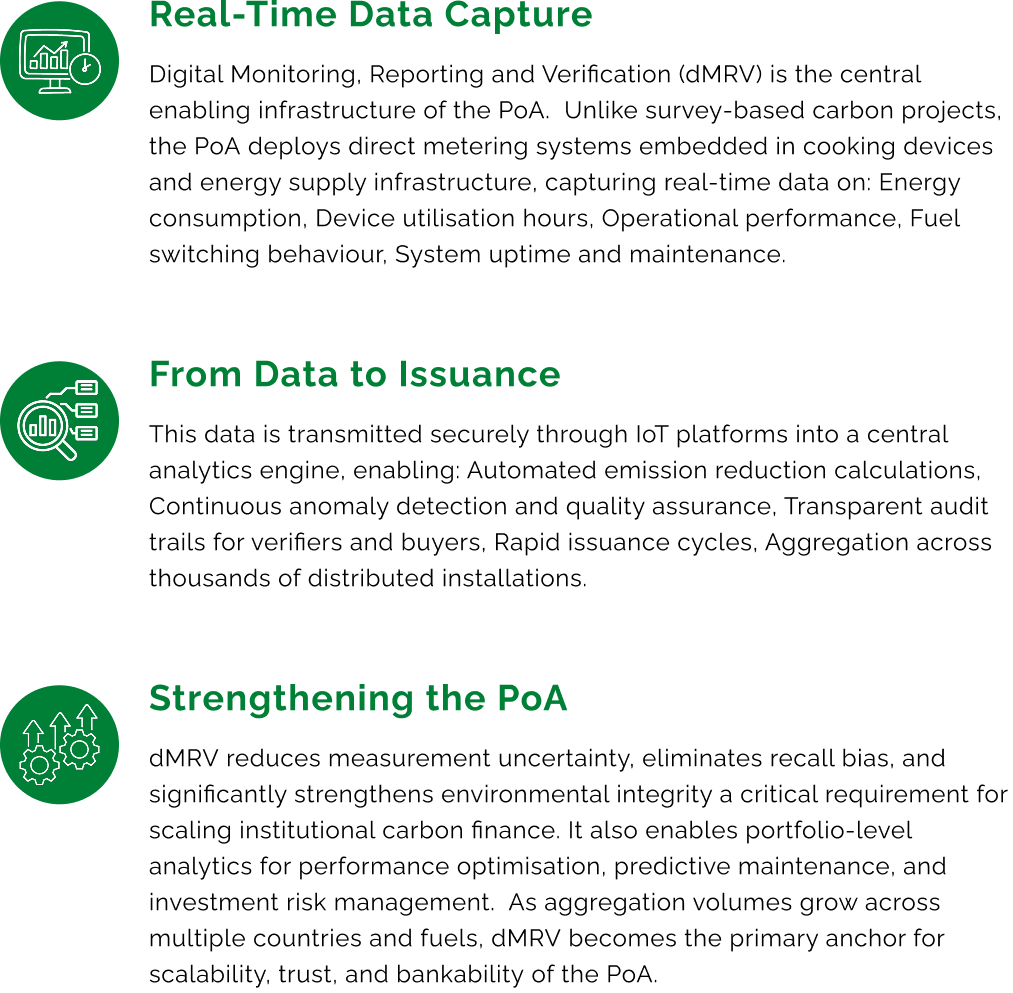
Digital MRV (dMRV) – Core Value Proposition
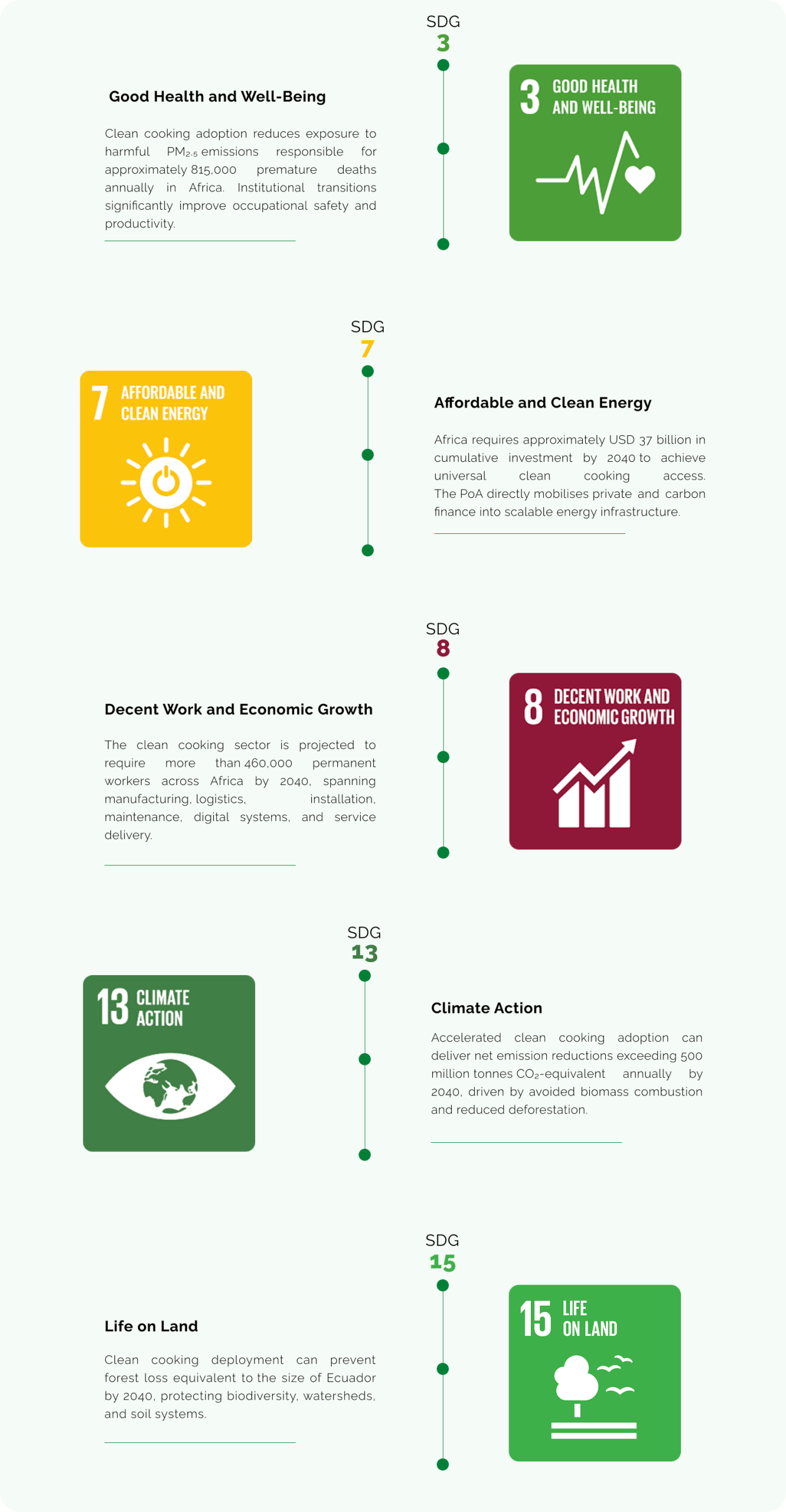
Impact and Sustainable Development Goals (SDGs)
Contribution to Sustainable Development Goals (Quantitative Impact)